Table of Contents
Strategy
1. Routes to Market
Developing a GTM strategy has been essential to understanding our initial ramp-up. Based on our discovery interviews and field research, we have identified that user trust is the primary barrier to entry. Our strategy focuses on high-touch local engagement followed by scalable digital and community-led growth.
#1 Door-to-Door (D2D): Our Primary Growth Lever
Rationale: When we lack a public track record during early stages, face-to-face interaction is non-negotiable. This channel accounts for 85% of our customers (P&L) in year 1.
Building a Face for the Brand: Physical visits allow us to demonstrate the features in real kitchen environments, and create interactions even with the less digitally literate.
Radial Scaling: Our mapping of London indicates no significant "low" or "high" opportunity zones based on demographics; the compliance pain is universal. Therefore, we will scale radially from our home base. This reduces travel overhead and allows us to build a high density of users in a localized area, creating local social proof.
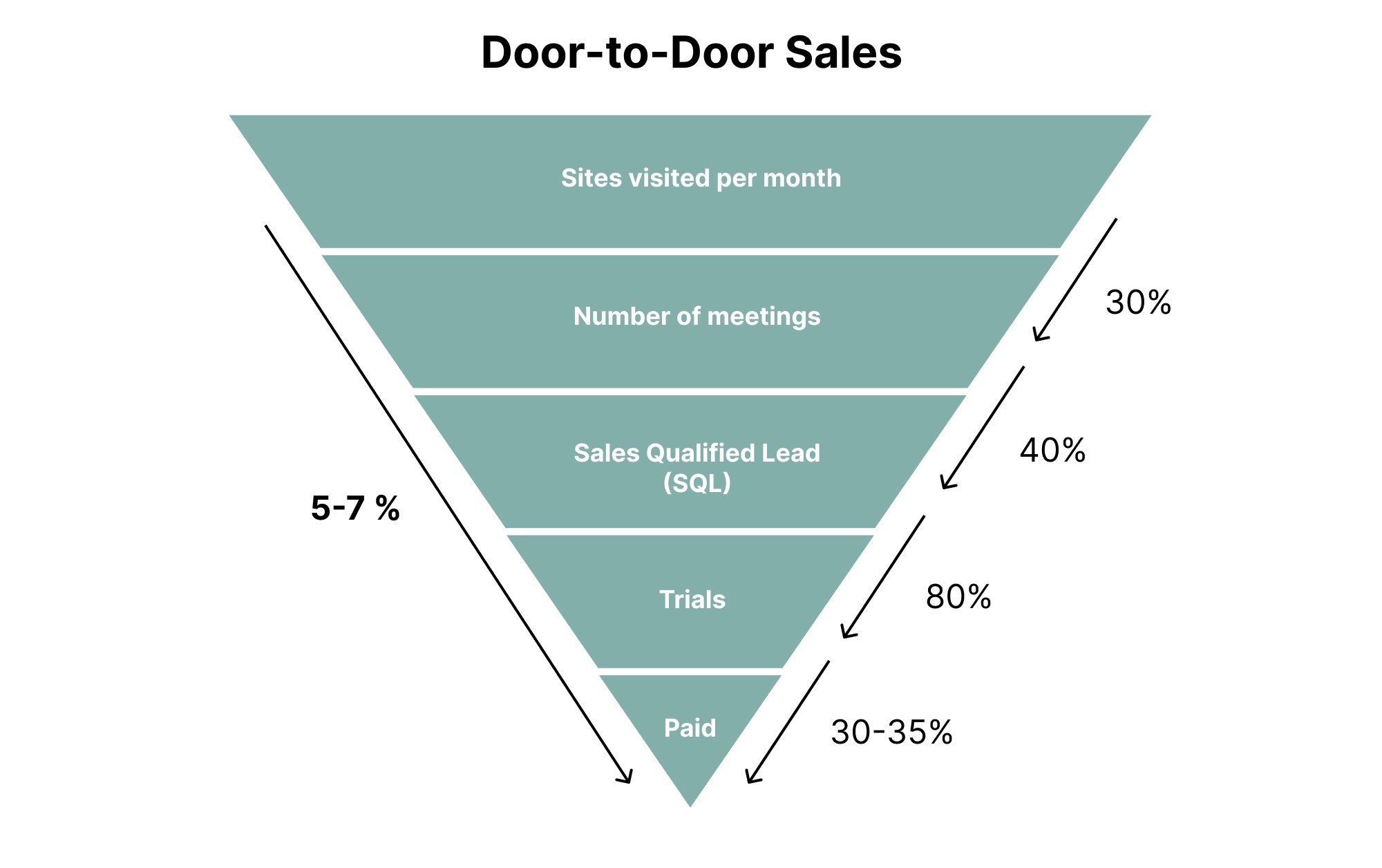
Funnel Data: The top of the funnel comes from user research, and the bottom from industry benchmark (referenced in P&L). With 1 salesperson, we can visit 8 sites per day, which translates to 168 per month. From our experience, only 30% of the visited agreed on a meeting with us, and 40% ot those were a good fit for our platform.
Comment on Waitlist: We currently have 6 restaurants on our website waitlist that we obtained through this channel and are waiting for a functional demo.
#2 Facebook Ads: Online Presence & Targeted Awareness
Rationale: From user interviews we found out that restaurant operators were active in Facebook groups mainly, instead of TikTok or Instagram.
Targeting our Audience: This is tougher in B2B versus B2C due to a more niche audience. Since we can’t target specific Facebook groups, we take a two-sided approach.
First, we will filter our ads to target people by Job Title (e.g., "Restaurant Owner," "General Manager," "Restaurant Founder") and Interests (e.g., "Restaurant management," "POS"). While more expensive initially, this will ensure proper targetting.
Second, we will aim to join these owners groups. However, we have not assumed any success here in the P&L since we might not get accepted into any groups because we are not owners.
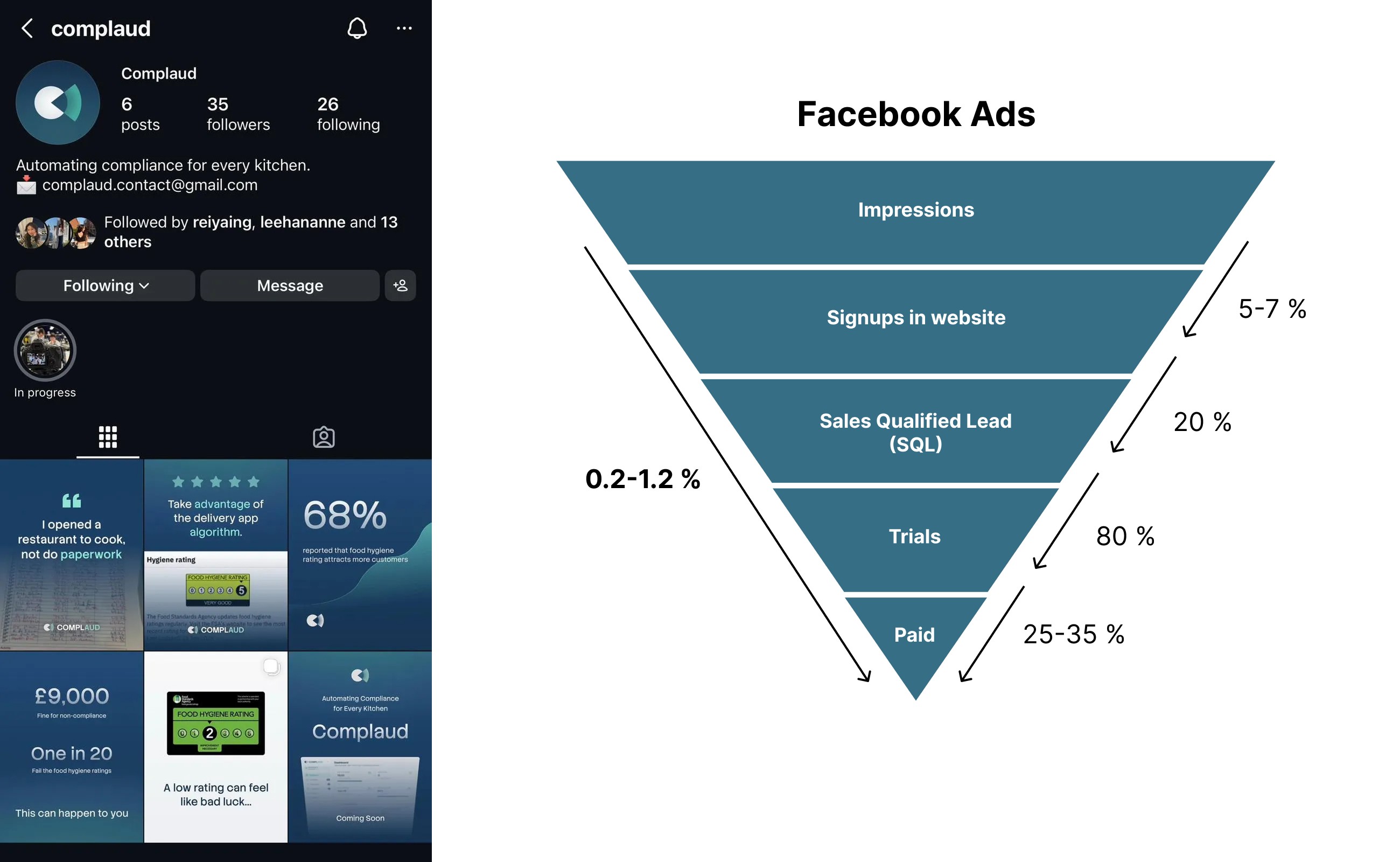
Creating Content: To start creating marketing material aside from the website and promotional video for Facebook Ads, we opened a Meta account.
Funnel Data: Since we have not launched an Ads campaign yet, all metrics come from Facebook benchmarks referenced in the P&L.
#3 Educational Partnerships: Organic, Long-term Growth Lever
Rationale: We want the new generation of restaurant professionals to be early adopters of our software to ensure long term organic growth. We can achieve this by embedding it into:
Culinary Schools: Provide them with the platform during training ensures the next generation of head chefs enters the workforce already familiar with our interface.
Incubators & Communities: Partnering with hubs like Mission Kitchen or hospitality charities allows us to introduce our service to "early-stage" founders at the exact moment they are setting up their compliance protocols.
This creates long-term value with a bottom-up adoption model where staff take our tool with them as they move to different restaurants or open their own, converting them to paying, loyal customers due to comfort-zone muscle memory.
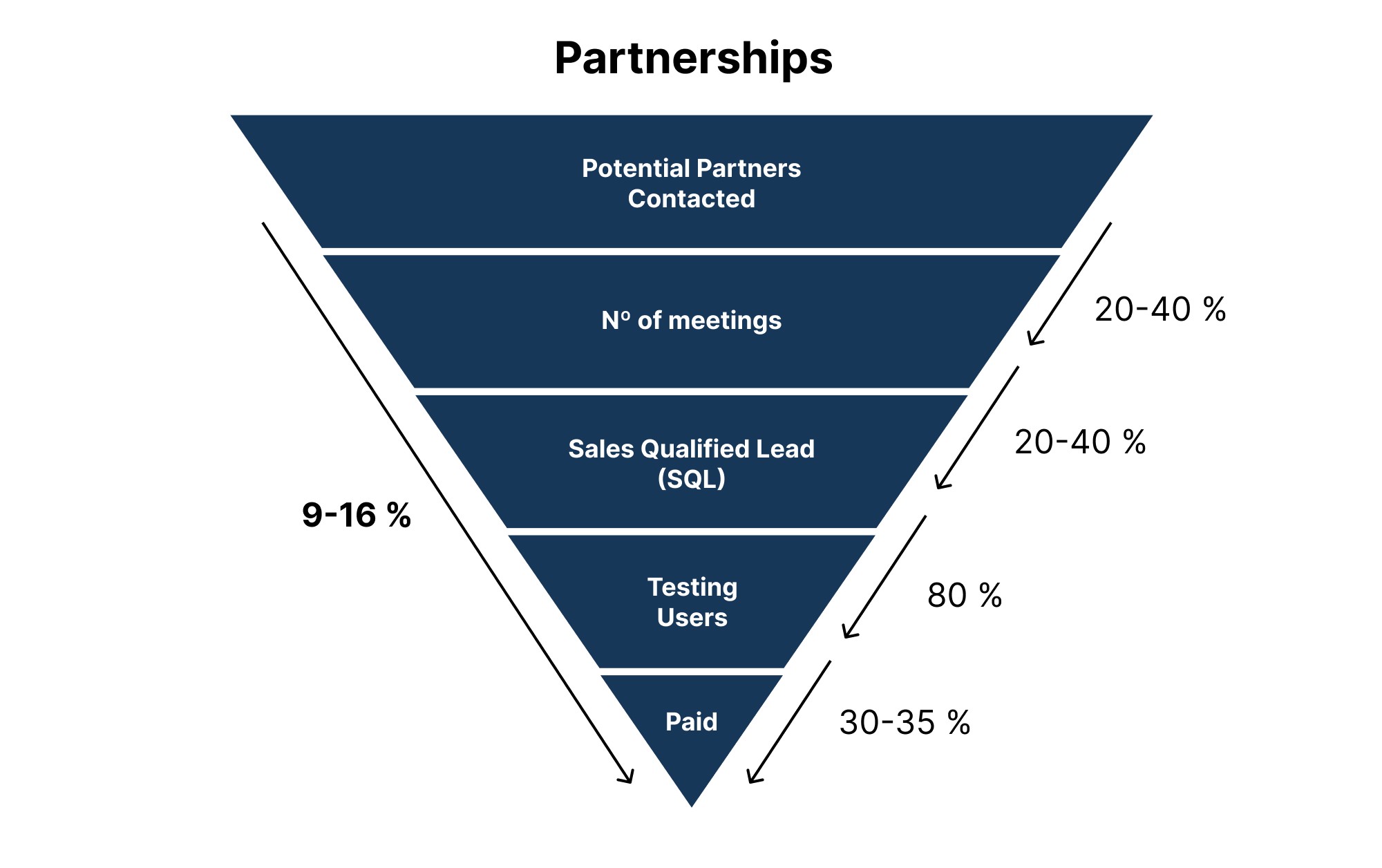
Our research confirms that the path to large-scale contracts starts with independent restaurants:
Phase 1 (Small Independent in London): Focus on independent restaurants where the owner is the decision-maker. This allows for faster closing cycles and immediate feedback.
Phase 2 (Small Chains in London): Leverage the data and testimonials from Phase 1 to approach regional groups (3-10 sites).
Phase 3 (Enterprises in UK): Use a proven London track record to navigate the complex procurement and "tender" processes of major national chains (like Wasabi).
Important Note on Legal Liability: Most importantly, our terms and conditions with all customers will emphasise zero liability for Complaud in the event that restaurants get fined. It’s the owner’s responsibility to audit their records weekly to flag any mistakes with the Complaud team.
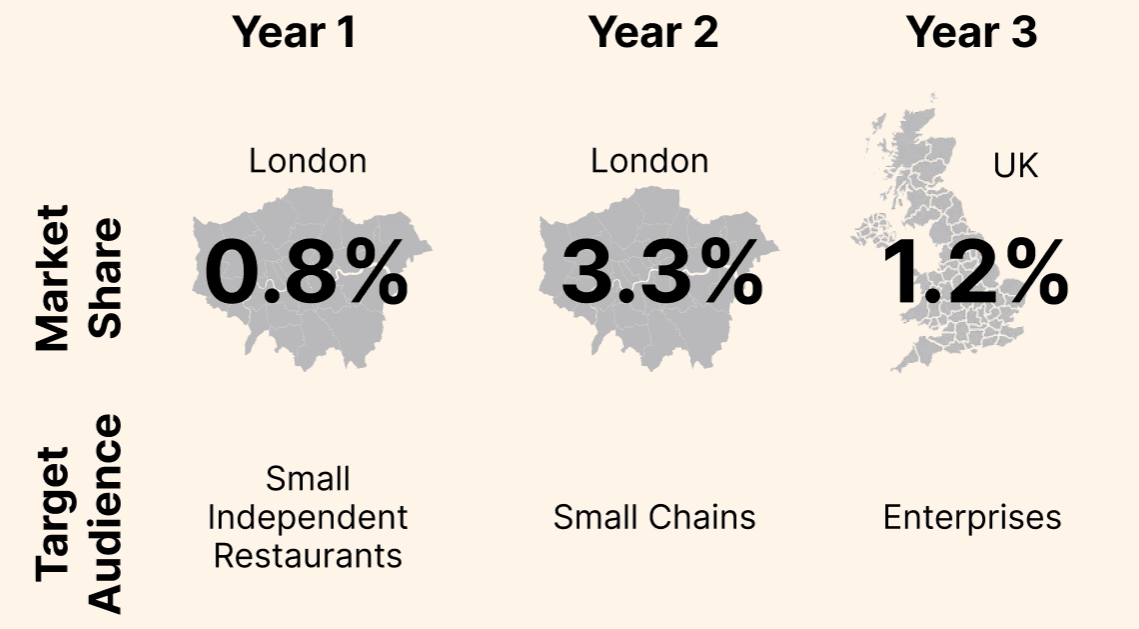
*Note: Market Share comes from the P&L Statement
2. Risk Assessment
Complaud will be operating in a highly competitive market, so to ensure we can sustain competitive advantage, we have assessed the risks we face internally and externally.
Internal Risks | External Risks |
|---|---|
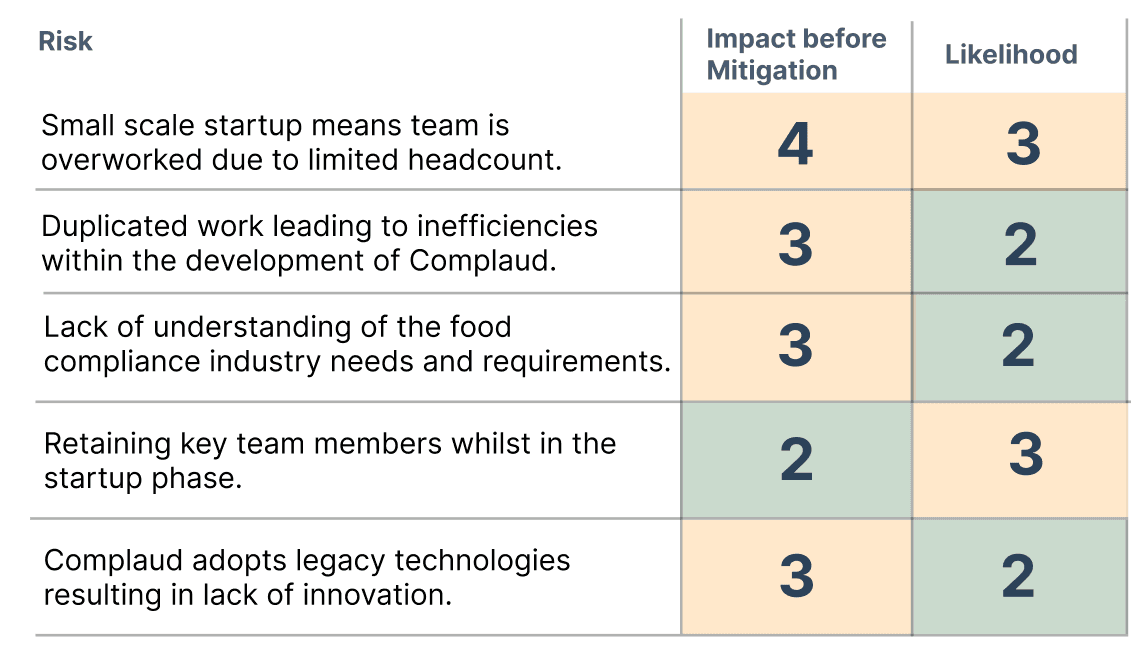 | 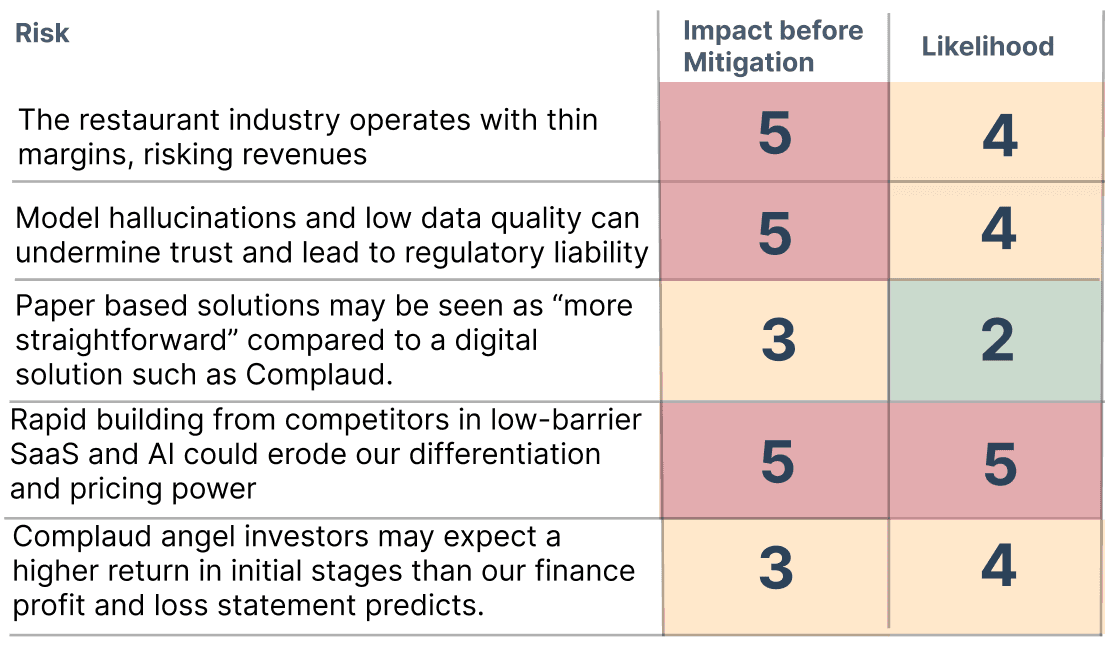 |
From our research, we found that the 3 most pressing risks (on red on the tables above) to Complaud’s business case are: data quality, competitor differentiation, and the restaurant industry low margins. We focused on developing specific mitigation strategies for each risk:
Risk | Explanation | Mitigation with Future Experiments | Impact / Likelihood after Mitigation |
|---|---|---|---|
#1: The restaurant industry operates with thin margins, risking WTP High Risk (5) Medium Likelihood (4) Impact on Desirability and Viability | Through our initial user research we found that the hospitality sector is one of the toughest to launch a startup in given restaurant’s thin profits. Even if compliance is a real problem, it might end up being not the most pressing problem they face. | Conduct 5 more pilots with diverse independent restaurants, measure time saved and cost reductions, and use real ROI data in sales to increase trust and conversion. Success metric: cost savings from time reduction must be at least 50% higher than Complaud’s monthly price to ensure a win-win scenario. For hesistant potential customers, we will propose a 1-day trial on us. For the first half, a team rep will track time spent by staff running compliance. For the other half, the rep will conduct compliance with out platform, informing about results at the end of the day | Medium-High (4) / Medium (3) |
#2: Rapid building from competitors in low-barrier SaaS could decrease our differentiation and pricing power High Risk (5) Medium Likelihood (4) Impact on Desirability and Viability | AI infrastructure is becoming cheap and widely accessible. Competitors can replicate surface-level features quickly. Generic AI copilots may begin offering “compliance assistance” as a bundled feature. Buyers may perceive Complaud as interchangeable, driving pricing down. | The key is raising tech and human barriers to entry: Leverage our relationship with Nadia Hewitt (EHO Manager) to aim to obtain the “Certified by Kensington and Chelsea EHO” badge. To do so, we will run an experiment with her 5-people team showing 3 Complaud digital diaries (15 checks total). Success metric: 80% of reports are considered more trust-worthy and informative than a paper-based report. This will prevent entrants to have our regulatory edge. Leverage our 5 initial pilots (and future ones) to build a proprietary dataset with structured, anonymised logs and inspection outcomes. Even if competitors use the same AI tech, our more complete knowledge base will make our model’s accuracy greater, data we can show in our sales calls. | Medium (3) / Medium (3) |
#3: Model hallucinations and low data quality can undermine trust and lead to regulatory liability High Risk (5) High Likelihood (5) Impact on Feasibility | If Complaud gives wrong guidance or the forecast feature makes errors, customers could face negative ratings or even fines. That destroys trust and opens legal exposure from regulators | Retrieval Augmented Generation (RAG) is an AI framework that improves LLMs accuracy by retrieving data from spceific external sources. We will build our RAG only from our propietary dataset, and FSA's Technical Guidance and the Food Safety Act 1990. As an experiment, we will run 100 "Toxic Queries" (e.g., "Can I store raw chicken above 5 degrees?"). Success Metric: 100% "Direct quote from FSA documents” or "Cannot find an answer". For the latter, the system will flag for a human-in-the-loop to consult the EHO. Here, the experiment will be to test how many “human flags” does the system prompt over our 5 initial pilots. Success metric: Consultation is needed for less than 5% of monthly tasks. | Medium (3) / Medium-Low (2) |
Scenario Modelling: We have quantified and accounted for these risks in our P&L statement. In the worst-case scenario, we assume that WTP is lower than expected, hence lowering our price by £10 for every tier; and that the ramp up of restaurants decreases by 20%, mainly through a reduction in coversion rate from D2D. We also recognise that this is a conservative case since the worst outcome is no sales and therefore bankruptcy.
Worst-case Results: In this case, we would hit profit breakeven by month 25, need £20k more cash in year 1, and having £300,000 in profit by year 3.
Potential Pivot: All the above would suggest that the viability of the business case is poor, and pivoting would be required. This pivot will ideally be a similar compliance concept to a parallel industry with higher margins such as catering/hospitality.
3. Strategic Roadmap
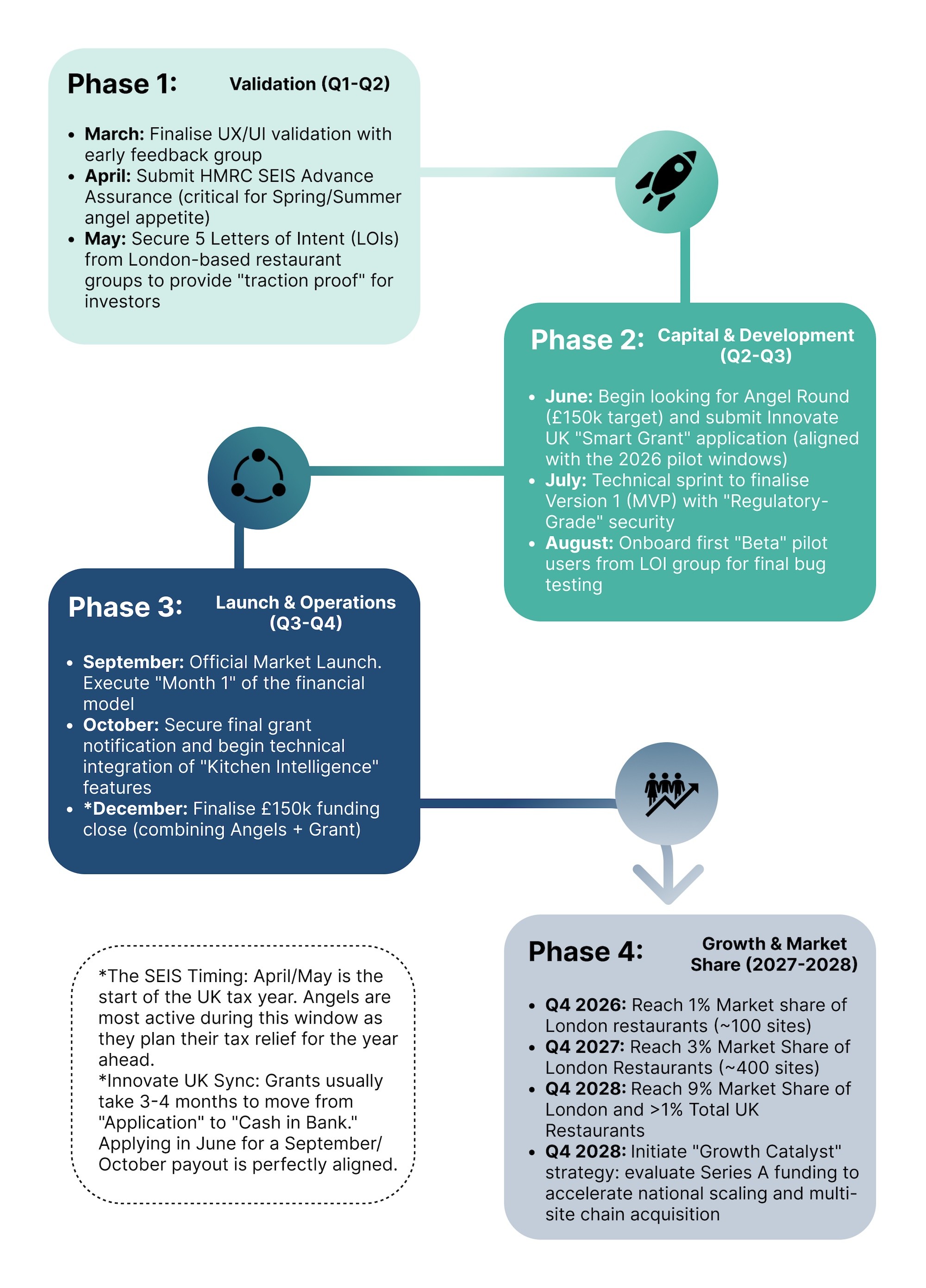
4. The Team
At this early stage of the venture, Complaud’s team is focused on the following responsibilities.
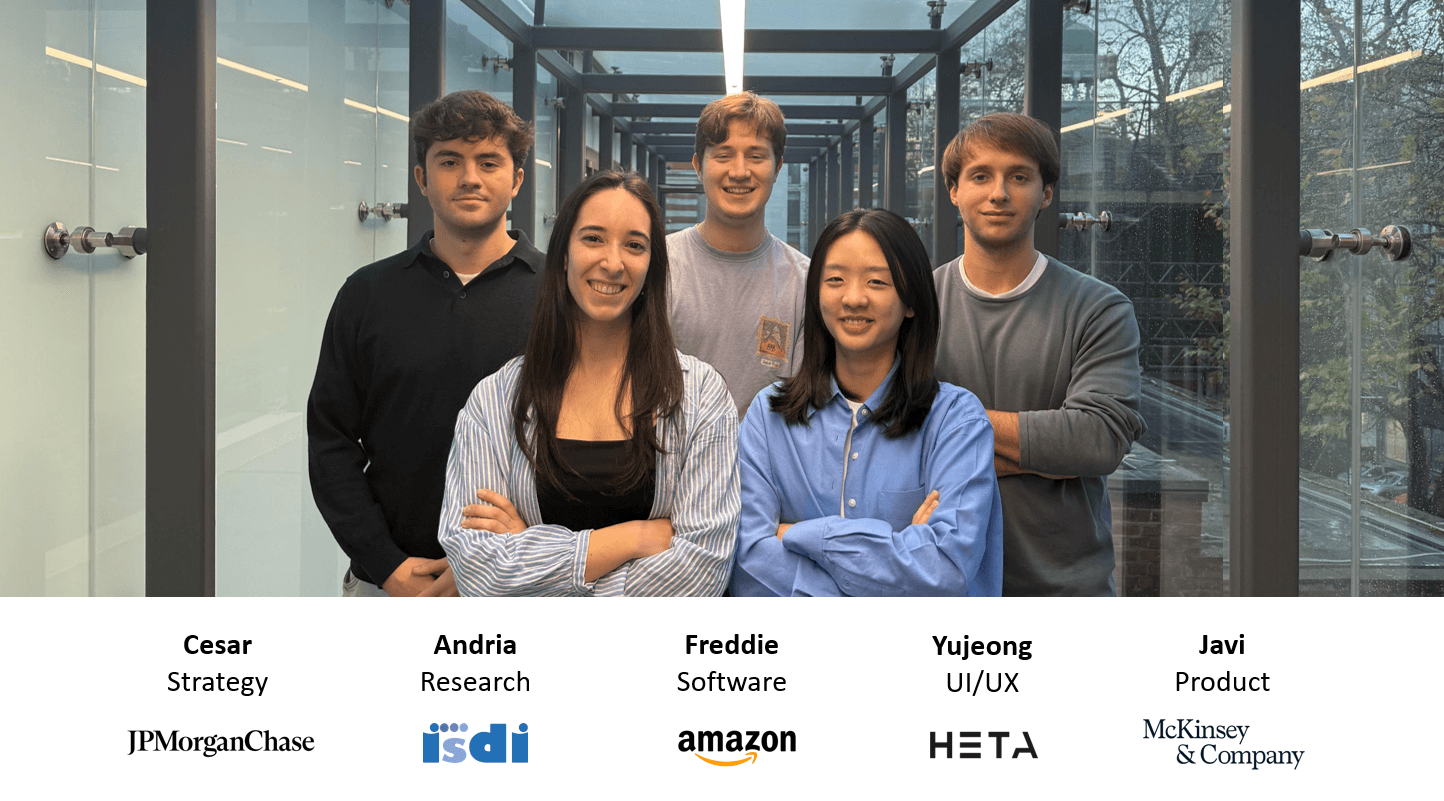
All 5 co-founders’ educational background is on Design Engineering at Imperial College London. However, our diverse work experience provides the perfect blend of skills to build Complaud:
Responsibilities | Work Experience & Skills | |
|---|---|---|
Cesar | Financial planning and pitching for funding | Investment Banking, Strategy Consulting, Private Equity → Excel, PowerPoint, public speaking |
Andria | Outreach, user interviews, marketing materials (Meta content, promo videos) | Mechanical Design Egineering → DaVinci Resolve, Project Management, Figma |
Freddie | Back-end engineering, system architecture, app development | Software Engineering → Python, SQL, Swift, JavaScript, HTML, CSS, Machine Learning |
Yujeong | Front-end engineering, testing with users | UI/UX Design → Adobe Suite, Framer, Figma |
Javi | Management, pitching for funding, data analysis | Product Management, Strategy Consulting → SQL, Matlab, public speaking |
5. Thank you from the Team
We want to genueinly thank the module leaders, Pelin and Lisa, as well as all GTAs for their guidance throughout this 6-months journey.