Table of Contents
Validation
1. Initial User Research
When we started, our initial goal was to understand the biggest operational headaches for restaurants in London. We didn't want to assume anything, hence we sat down and conducted 15 in-depth discovery interviews with local operators.
We asked them to lay out all their day-to-day friction points, essentially creating a funnel of their problems. They talked about stock management and staff retention, but as we filtered these issues down, one massive, universal bottleneck kept appearing at the bottom of the funnel: Compliance.
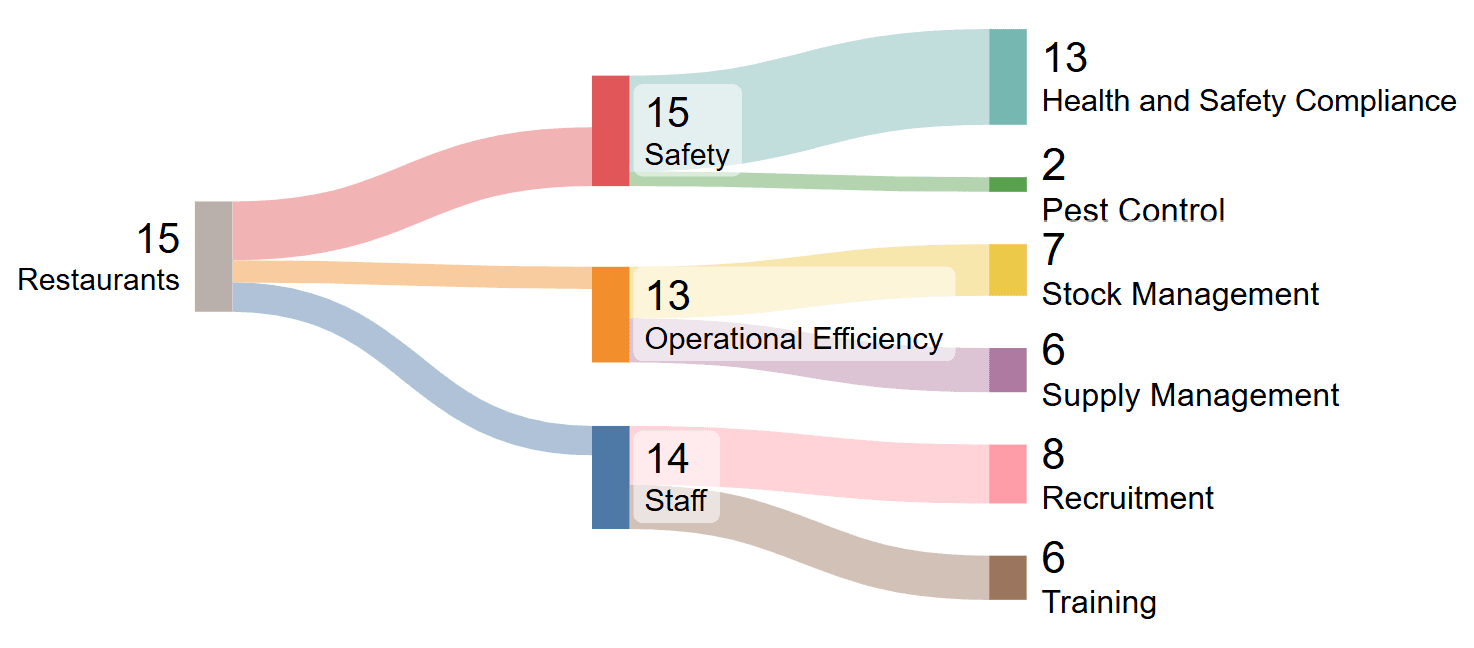
Once we identified compliance as the primary recurring problem, we became laser-focused to understand exactly what mattered most to them in this space. More importantly, we needed to identify the big, make-or-break assumptions we had to validate before we could even think about launching a company.
2. Assumptions matrix
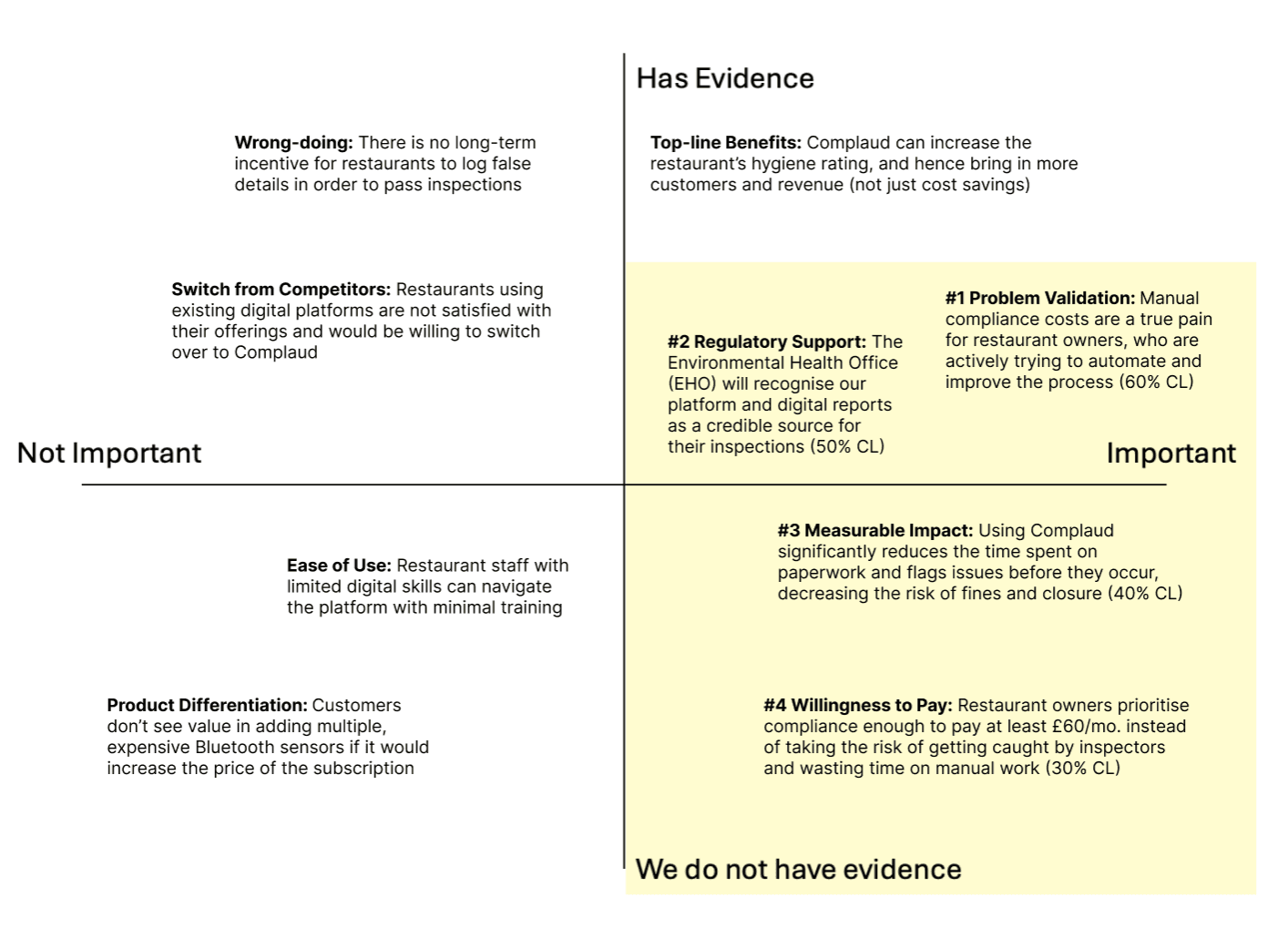
After mapping our 10 main assumptions, we decided to prioritise 4 given the tight timeline. This was done through an evidence versus importance 2x2 matrix, method from the book Testing Business Ideas by David J. Bland and Alexander Osterwalder.
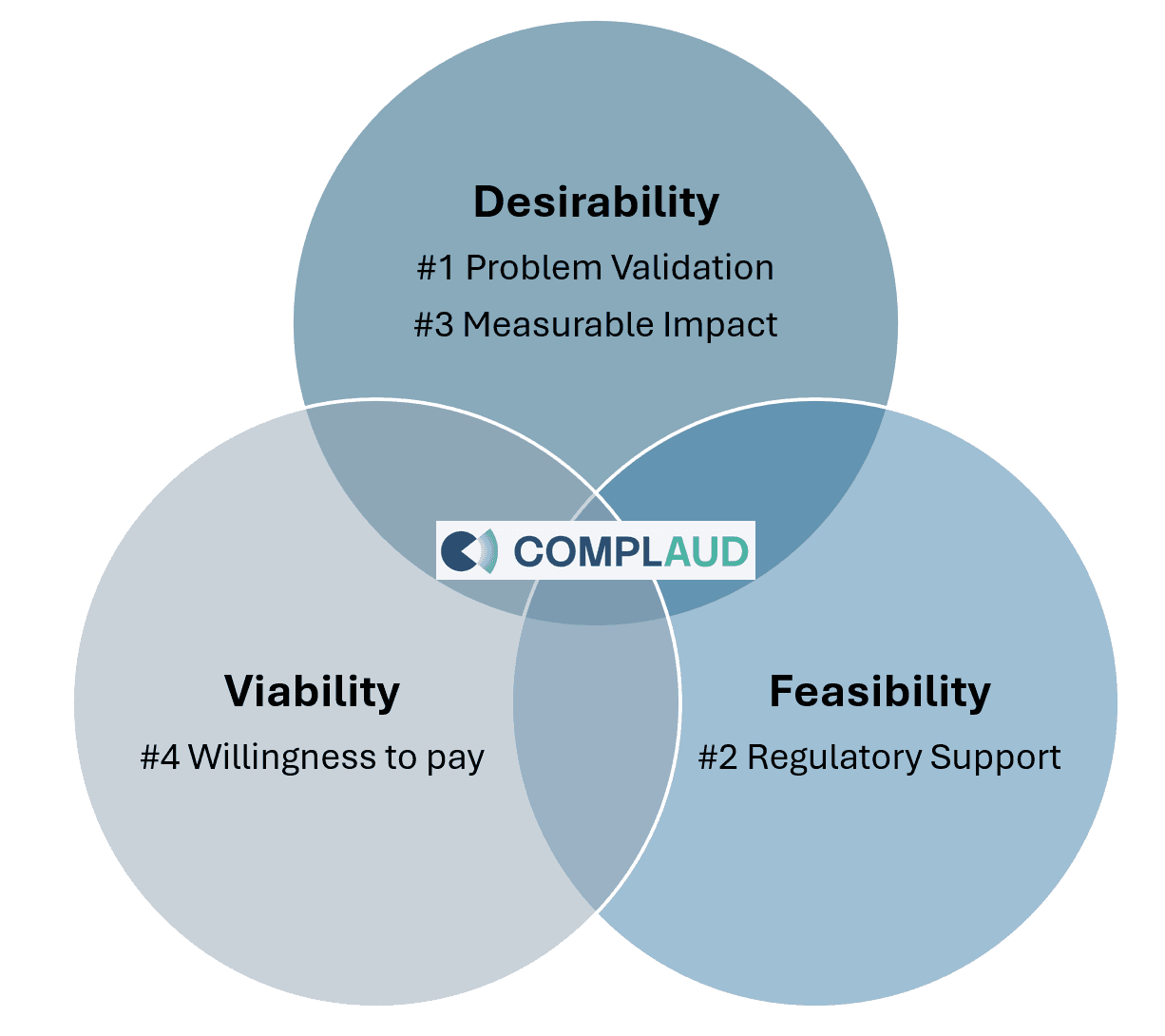
The key takeaway from it was to reduce the risk of our new venture by breaking down assumptions into "desirability, viability, and feasibility" and testing the most important and least documented ones (highlighted in yellow below).
3. Validating Assumptions
Assumption #1: Problem Validation
“Manual compliance costs are a true pain for restaurant owners, who are actively trying to automate and improve the process” - 60% Confidence Level
Intentional Outreach: The London Heatmap
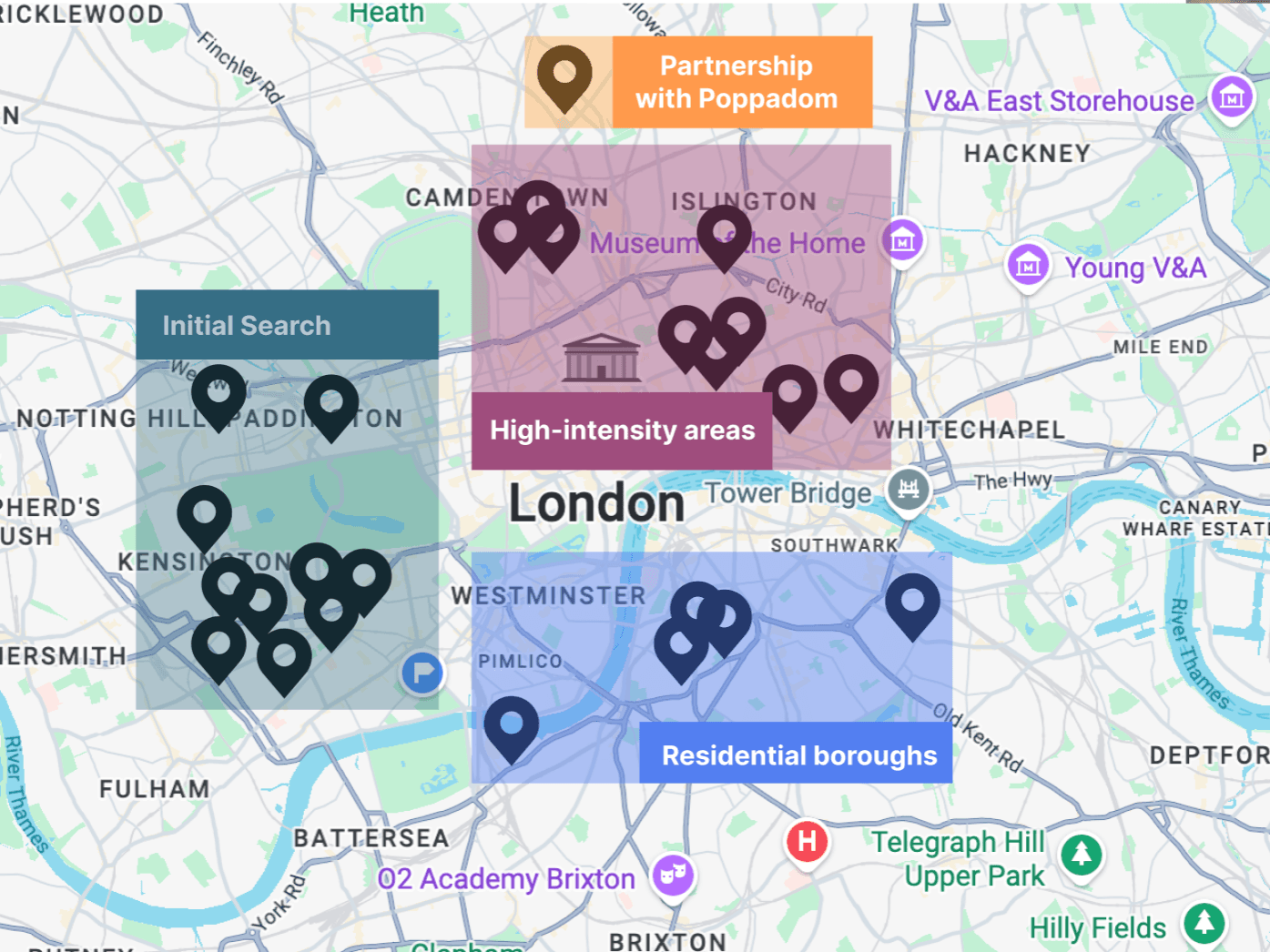
We recognised that the initial 15 user interviews were conducted mostly within our “comfort area” close to Imperial. Hence, we expanded our research area for 10 additional next deep-dive interviews (25 in total) to ensure we were not solving a niche problem.
Scale: We targeted (1) independent "mom-and-pop" restaurants, (2) growing restaurants with 2-5 sites, and (3) multi-site high-street chains, which aligned with our starter, main, and full business model subscription tiers, respectively.
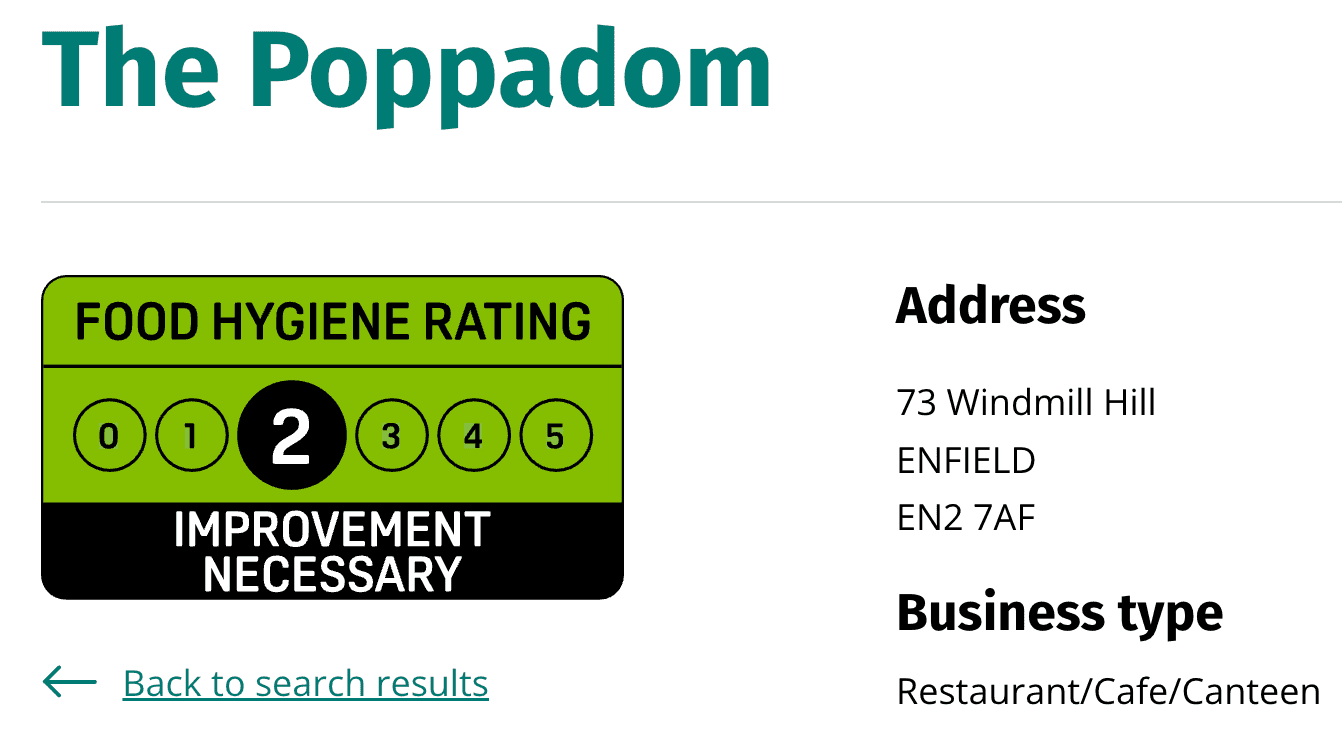
Prioritisation: We aimed to interview restaurants with low food hygiene ratings (<2/5) since we assumed they had higher-pressure needs, while also speaking to 5/5 restaurants to understand what they did well.
Geography: We covered high-intensity Central London (Soho, City) and residential outer boroughs to ensure coverage of different profiles.
Method: The Mom Test by Rob Fitzpatrick. The main lesson we took and applied from this book was to not ask anyone if our business was a good idea; we asked about their specific past behaviours and current pains. "It’s not anyone else’s responsibility to show us the truth. It’s our responsibility to find it. We do that by asking good questions."
Key Quote: “We opened a restaurant to cook, not do paperwork” - Azad, Poppadom’s owner
Key takeaway from interviews → roll-out strategy: While the complexity scale changes, the pain is universal. However, starting targetting smaller operators in Central London will allow for faster iteration and better traction before scaling to the more rigid but higher paying procurement cycles of large chains.
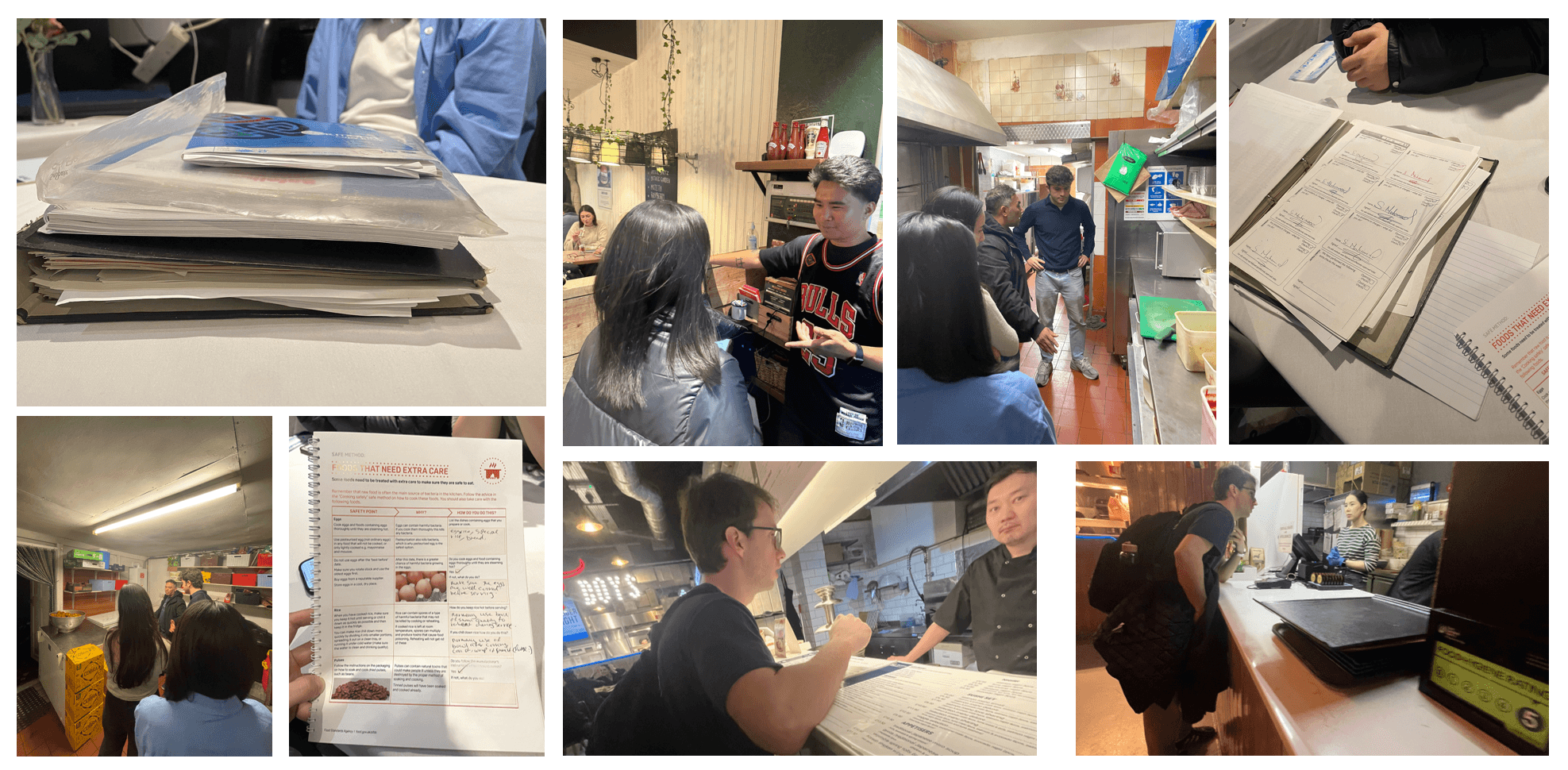

Deep-Dive: From Interviews to the 11:00 AM Shadowing Experiment
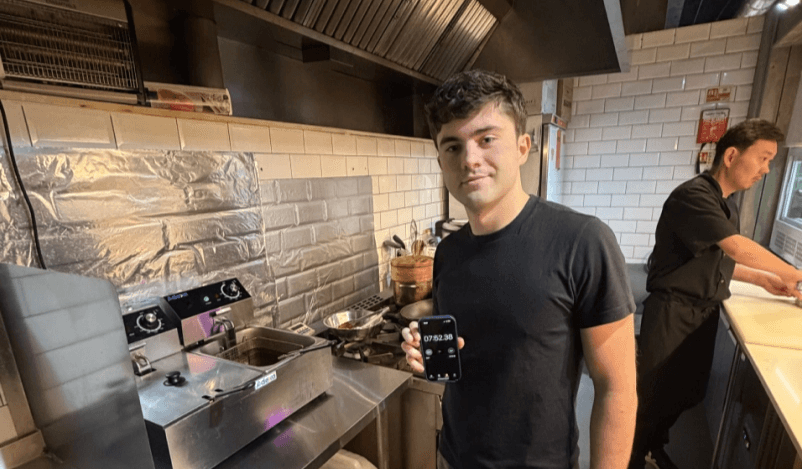
Validation isn't just about what people say, it’s about what they actually do. Hence, we spent time shadowing staff to measure the time spent on compliance at Medz Corner Food Court, and assess its impact to their business performance.
We intentionally ran this session during the critical transition period (11:00 AM), where staff are balancing final prep with the first wave of customers:
The Observation: In a 30-minute window, a single staff member spent 8 minutes (see picture below) exclusively on compliance-related tasks like temp logs, hygiene checks, and manual documentation
The Math: That represents 26% of their time during a peak operational window
The Extrapolation: When extrapolated across a full 12-hour operational day, this equates to roughly 1-1.5 hours per day. At a £15/h wage, that represents roughly £8000/year lost to compliance (£15/h * 1.5hr * 360 days/yr).
A Quote: “It’s one of the most tedious tasks in my day, and I’m always trying to find ways to get through it faster.” - Kitchen Manager from Ganzo Kitchen
Key Takeaway: In an industry with razor-thin margins and high labor costs, losing over an hour a day to "paperwork" isn't just an inconvenience, it is a direct hit to the bottom line.
Assumption #2: Regulatory Support
“The Environmental Health Office (EHO) will recognise our platform and digital reports as a credible source for their inspections” - 50% Confidence Level
The "Boots on the Ground" Approach
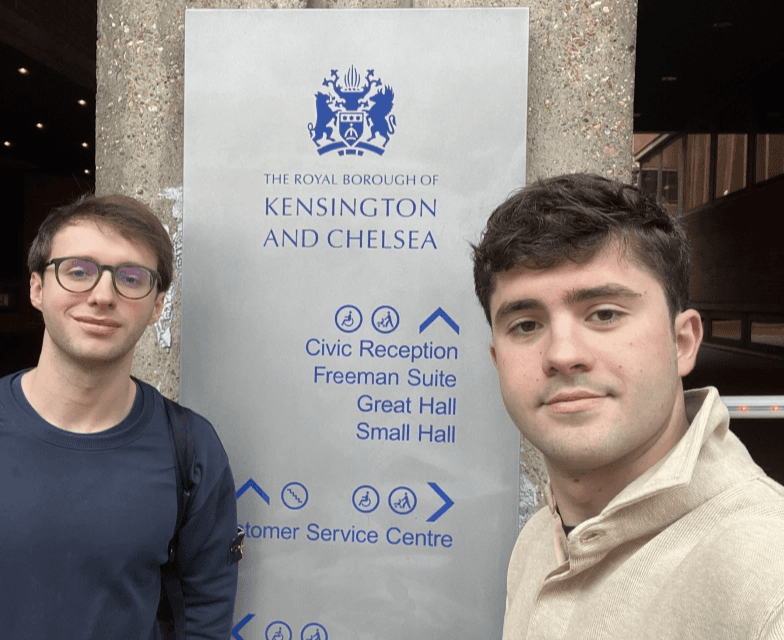
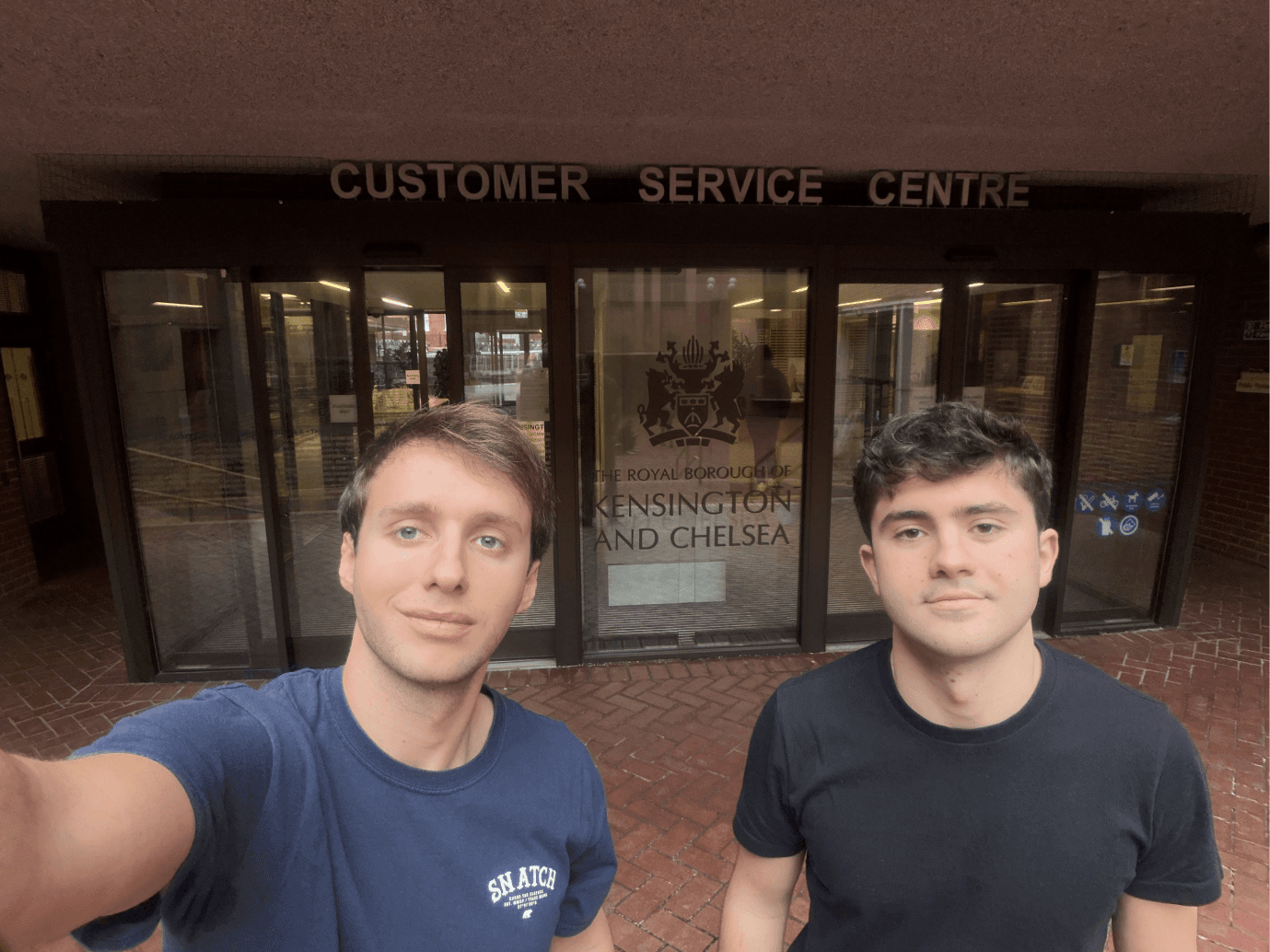
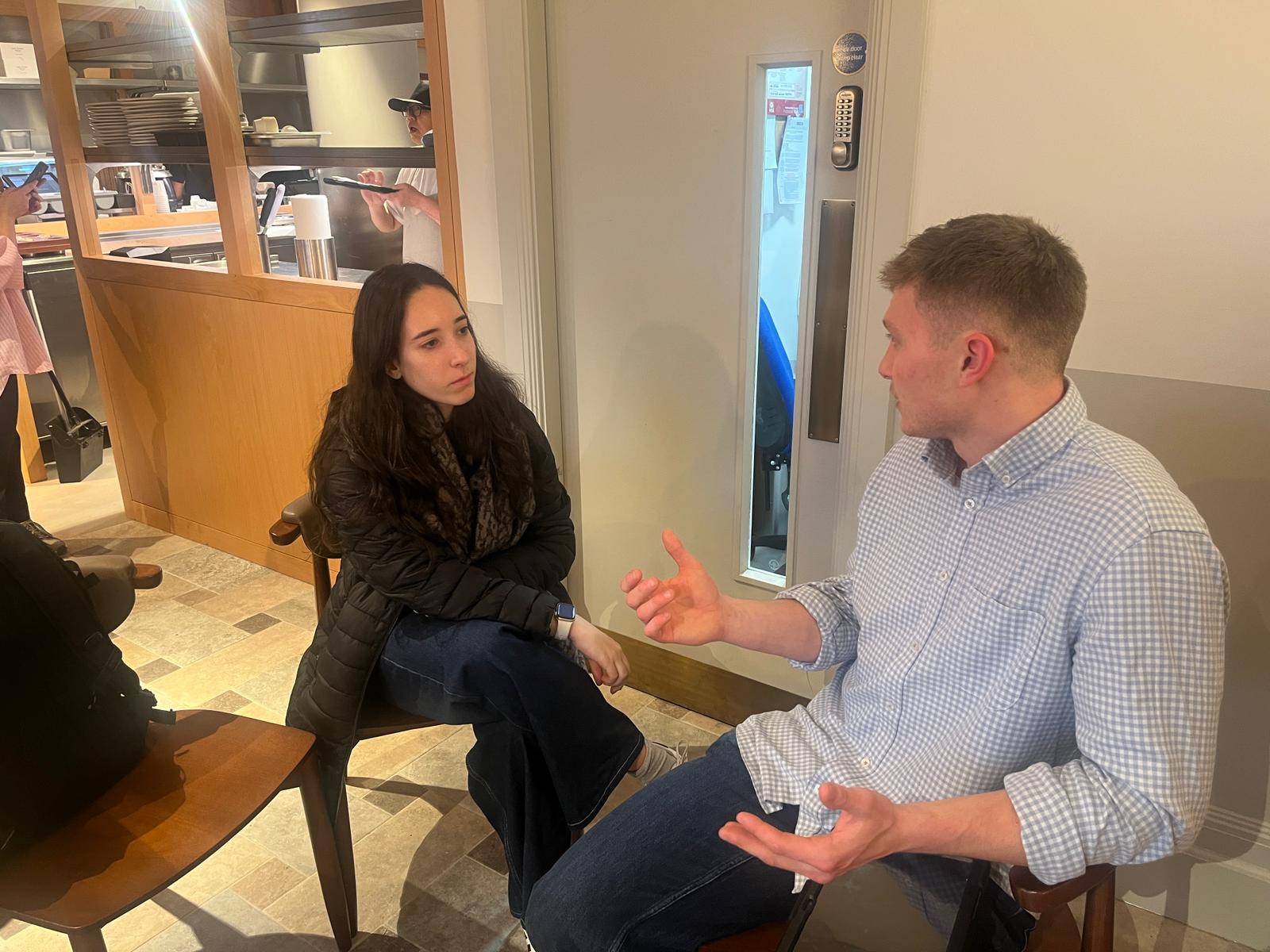
If an inspector didn’t recognise our digital reports as legal, there was no business case. Acting upon feedback from term 1 we tried to reach regulatory bodies online, which proved difficult. Hence, we took a "boots on the ground" approach and visited the Environmental Health Office (EHO).
During our first visit (see below, left), we were told that it wasn’t possible to meet in-person. Knowing from lectures that persistency was the key of successful entrepreneurs, we want back the following day (see below, right) and secured an interview with Nadia Hewitt, the EHO manager in Kensington and Chelsea. Speaking to the highest authority with 30 years of inspection experience was the best piece of validation we could have ever gotten.
Key Inspector Insights
Nadia provided rare insights into the other side of the audit.
On Trust & Data: "A digital system adds confidence because it’s harder to falsify. They’ll sometimes fill in the manual records while you’re waiting in the lobby."
On Digital Literacy: "Some chefs are not digitally literate. They’ll always rule rather than go and find the iPad."
On Automation: "I’ve only seen one business using automated temperature monitoring, and I absolutely loved it. It shows the organisation is invested in compliance."
Please find the recording attached. We were asked not to make any details public.
Strategic Realisations
The kew takeaway was that the true "compliance problem" is not the inspection itself, but the gap in execution between inspections. Hence, we crafted the following requirements for our prototype:
Evidence Beats Intention → Inspectors value time-stamped photos and automated records over verbal assurances or handwritten folders.
Ease of Use is the Priority → If a system requires a staff member to stop service or navigate a complex UI, it will be bypassed in favor of a pen.
Regulatory Allies → Inspectors are not adversaries, they are quiet allies of any tool that reduces enforcement friction and proves a business is investing time and money.
Future-Proofing → Discussions around licensing suggest that digital records will soon move from a "luxury" to a mandatory industry standard, creating a competitive advantage for us.
Assumption 3: Benefits for Restaurants
“Using Complaud significantly reduces the time spent on paperwork and flags issues before they occur, decreasing the risk of fines and closure” - 40% Confidence Level
Prototyping
The most common question we got asked during interviews was: “Can you show us your app?” However, building a fully functional app would have taken at least 3 months and 2 engineers to build. Hence, we followed the quick, dirty prototyping approach learnt during lectures.
Approach: Given the outstanding AI advances with Claude’s Opus 4.6 and Lovable on February 2026, we decided to use vibecoding.
Our Edge as Design Engineers: The main drawback of vibecoding is lack of customisability; it can create overly generic apps even when properly prompted. However, we leveraged our Design Engineering toolkit to solve this. We created our UX/UI on Figma and imported it to Lovable to ensure proper branding. One the code was generated, we exported it to Github which enabled us to modify the code ourselves, and host the app for free.
Benefits: Fully functional app for pilot. Took a week with free tools, not months with expensive engineers.
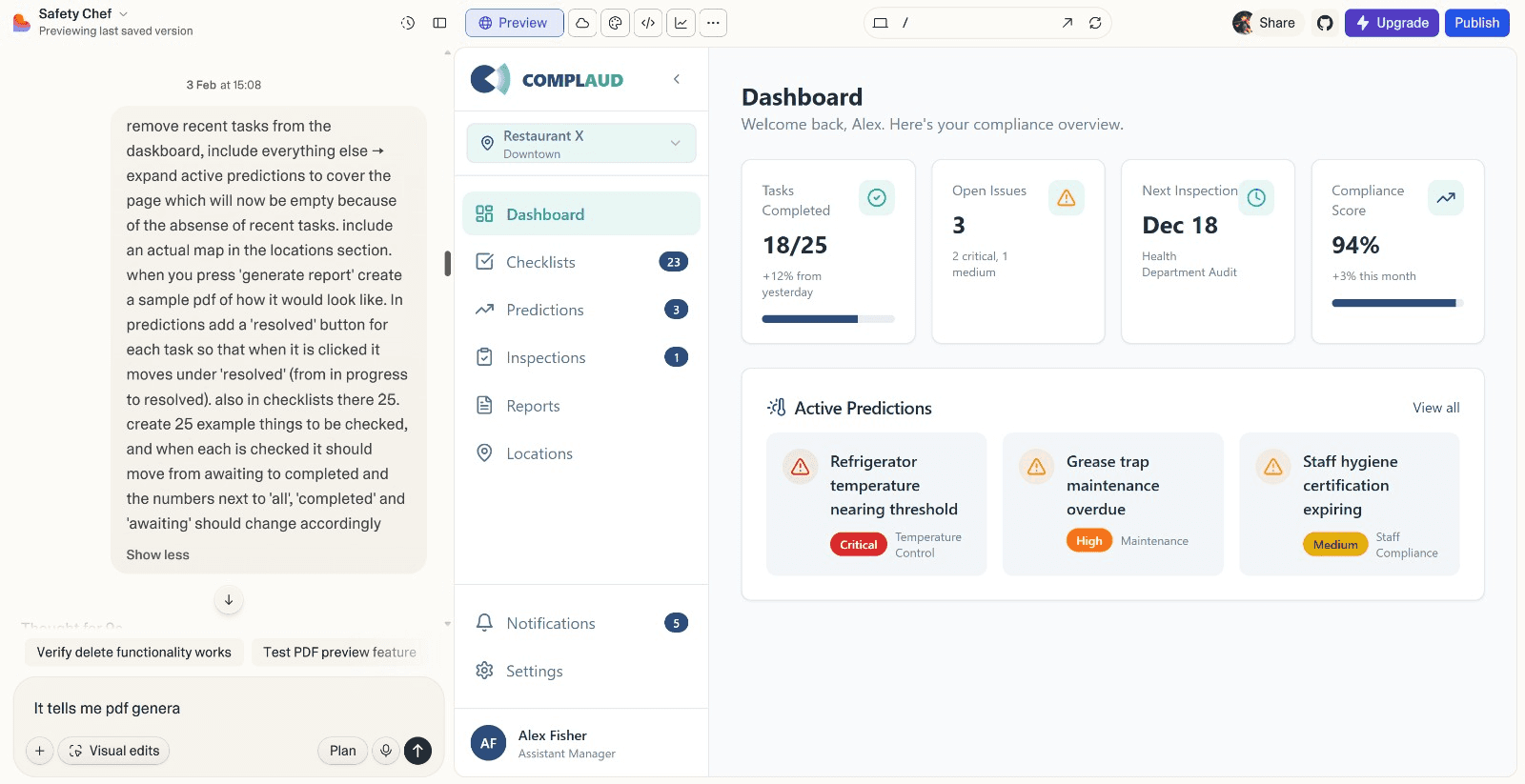
The first iteration involved:
Choosing the most pressing and recurrent framework from all regulatory paperwork (see below) to prototype, the Diary (opening and closing checks)
Add requirements from EHO interview (see strategic realisations above) and interviews
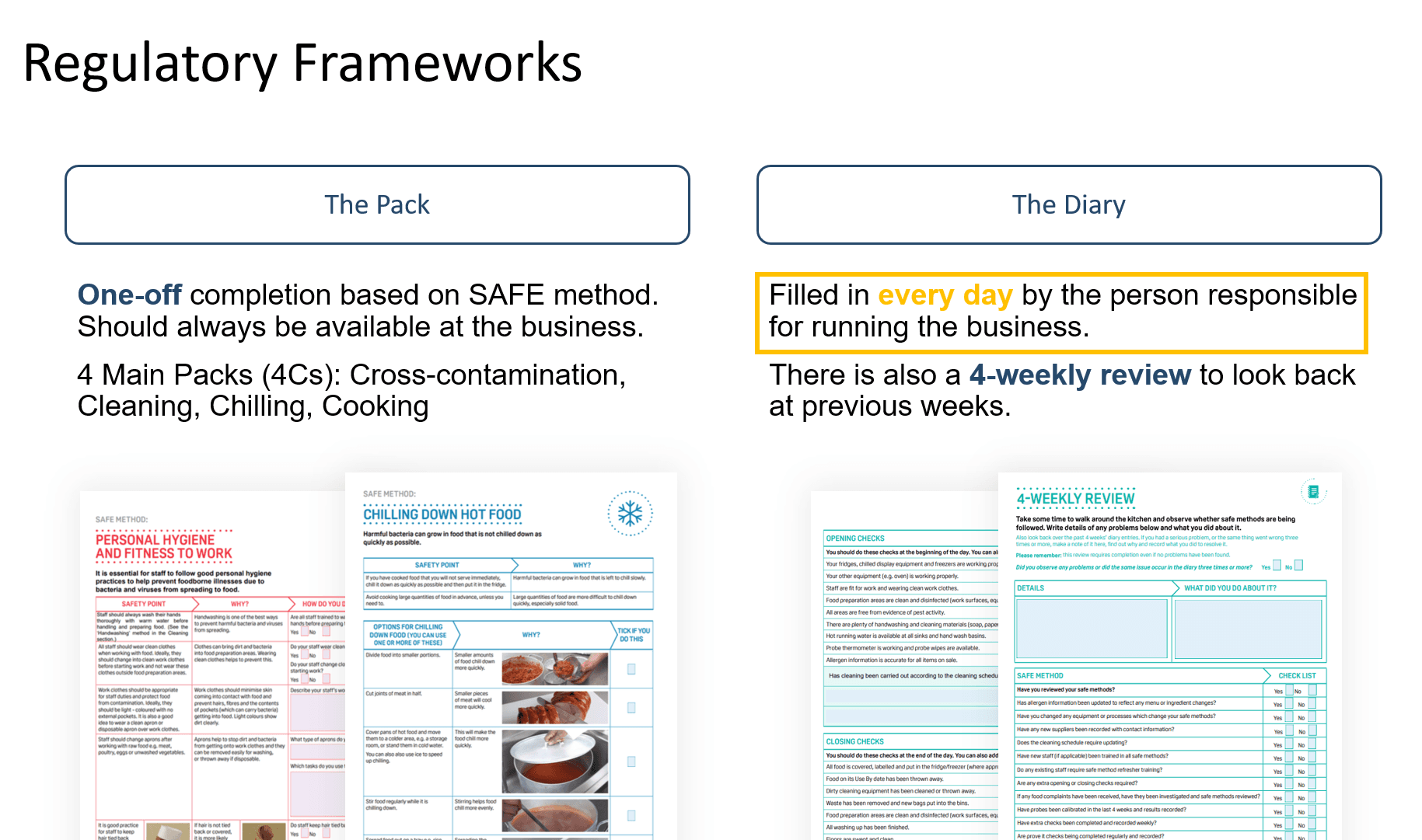
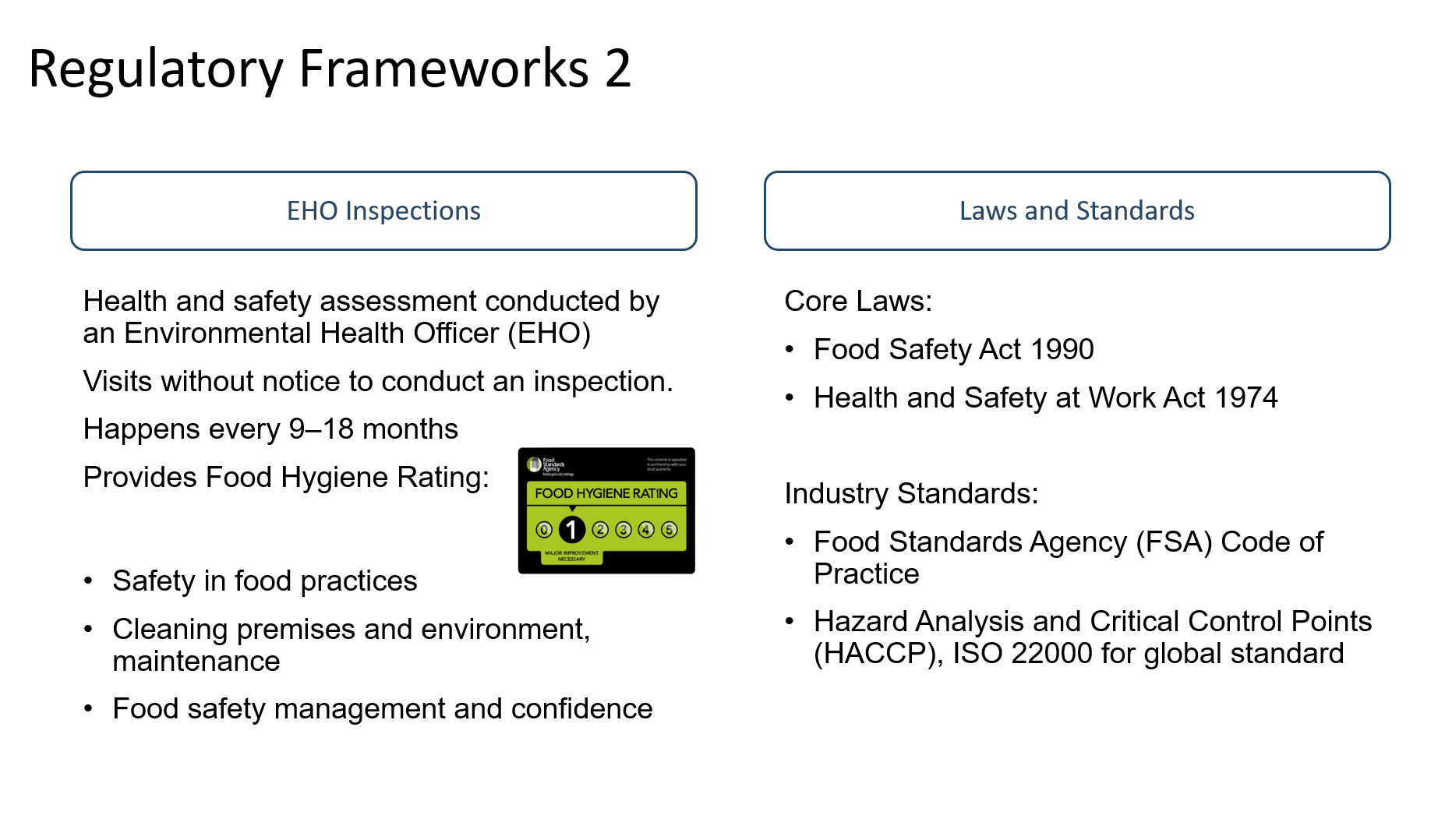
Initial Experimentation: The "Compliance Lab"
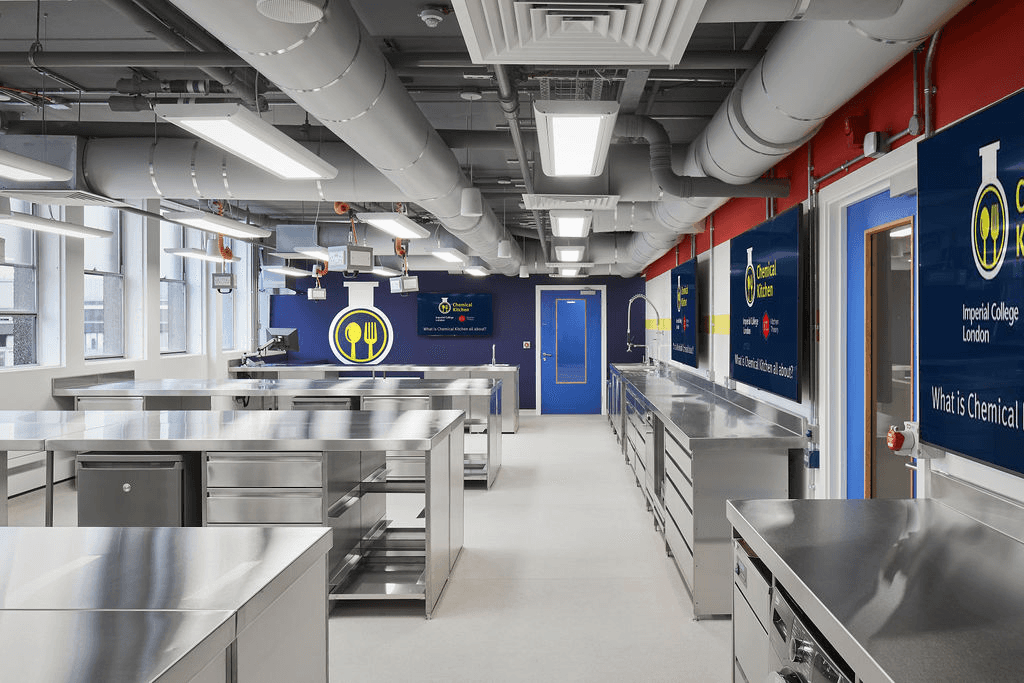
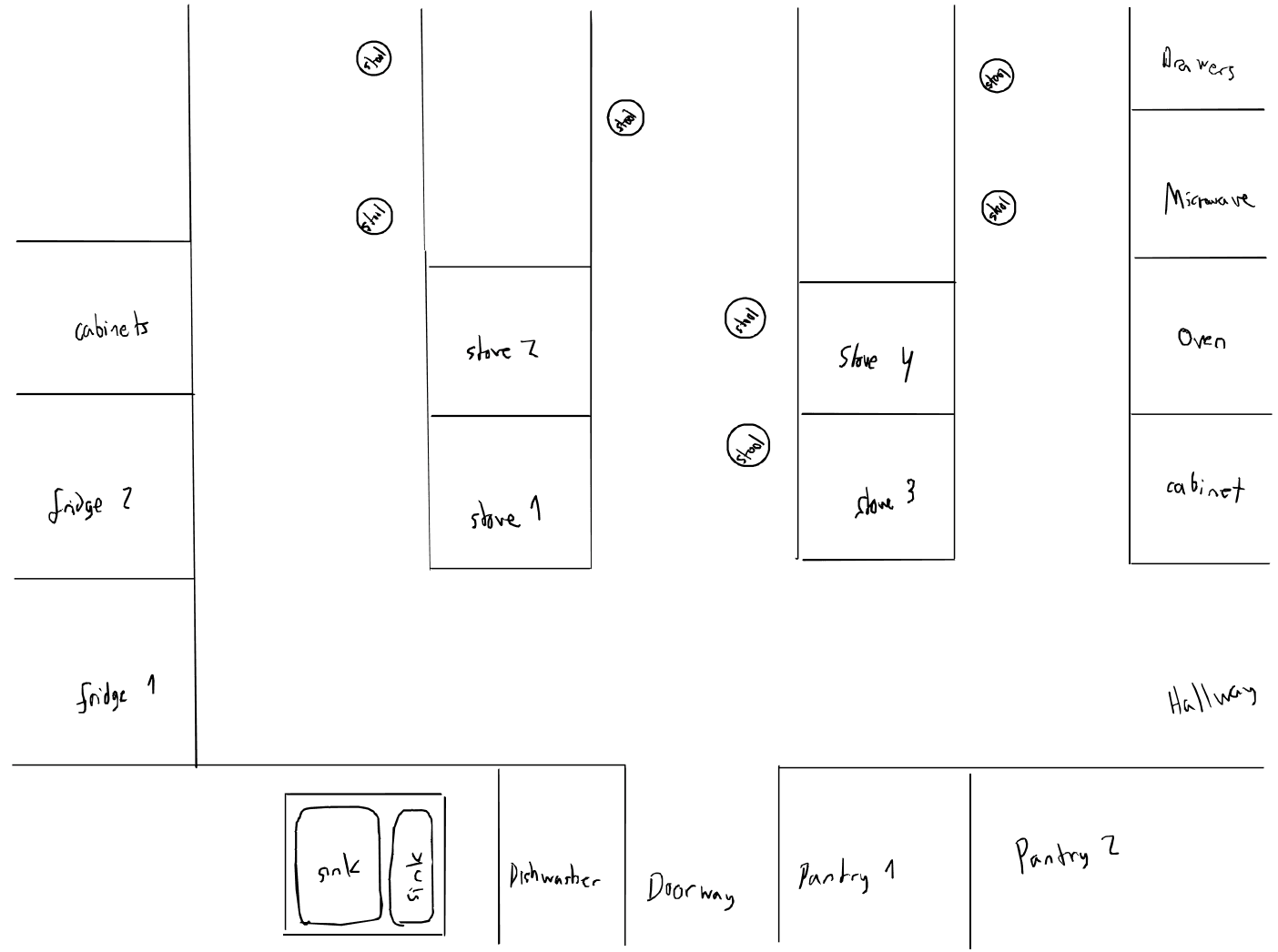
In order to test our first iteration, we didn't just build an office. We established a simulated commercial kitchen environment mapped to the specific stations and tasks identified during our research. This was done through the Chemical Kitchen at Imperial (see below).
Rigorous Testing: We conducted five 30-minute high-intensity simulations, comparing how much time was saved with our prototype versus with the manual Diary. On average, the time saved in this experiment was 60%.
Iterative Design: This allowed us to refine the UI for "greasy-finger" usability by making clickable icons larger and hide text from checklist actions for better readibility.
The Pilot: Real-World Testing with Poppadom
We have entered a strategic development partnership with Poppadom, a London-based restaurant that had been actively seeking to improve and automate this process given their low hygiene rating.
Method: The rationale for conducting a pilot came from Testing with Humans by Giff Constable. The lesson we took from this book is once you’ve talked to people, you must design rigorous experiments to see if they will actually do what they said they would do.
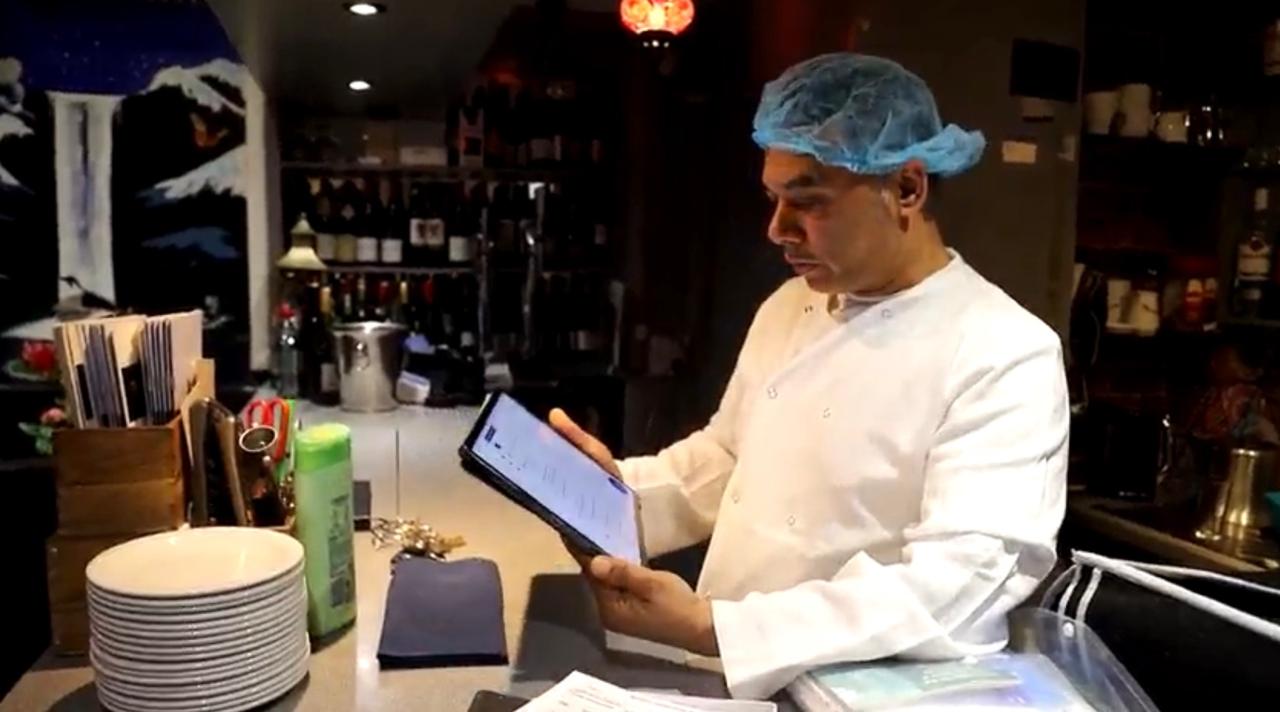
By deploying our prototype in their live kitchen, we moved from theoretical assumptions to measurable benefits:
50% Reduction in Compliance Time: Even with a conservative estimate, accounting for the staff's initial learning curve, we have successfully halved the time required for daily compliance.
Streamlined Workflows: By automating repetitive data with our voice input feature, we have removed the friction that leads to "clipboard fatigue" while maintaining 100% accuracy, which was a concern during term 1, now solved.
The Economic Impact: Time is Revenue
By applying these pilot results to our earlier shadowing data, the economic argument for the platform becomes clear:
Annual Labor Recovery: We are reducing the manual compliance burden from 90 minutes per day down to under 45 minutes. For a single location, this recovers approximately 270 hours of labor per year, or £4000 a year.
Risk Mitigation: Beyond labor costs, the app flags potential issues before they occur (e.g., a fridge temperature trend) rather than documenting a failure after, decreasing the money spent on fines. However, we were not able to quantify this since it would require months of piloting and an inspection result.
Delivery Apps: Delivery apps such as Deliveroo rely on minimum hygiene ratings to enter their platform. A higher score is likely to lead to more customers through these platforms.
Higher Traffic: A move from a 3-star to a 5-star hygiene rating in London has a direct, documented correlation with increased footfall and delivery platform rankings.
Assumption #4: Willingness to pay (WTP)
“Restaurant owners prioritise compliance enough to pay at least £60/mo. instead of taking the risk of getting caught by inspectors and wasting time on manual work” - 30% Confidence Level
Proven Traction: Commitment for First Paying Customer
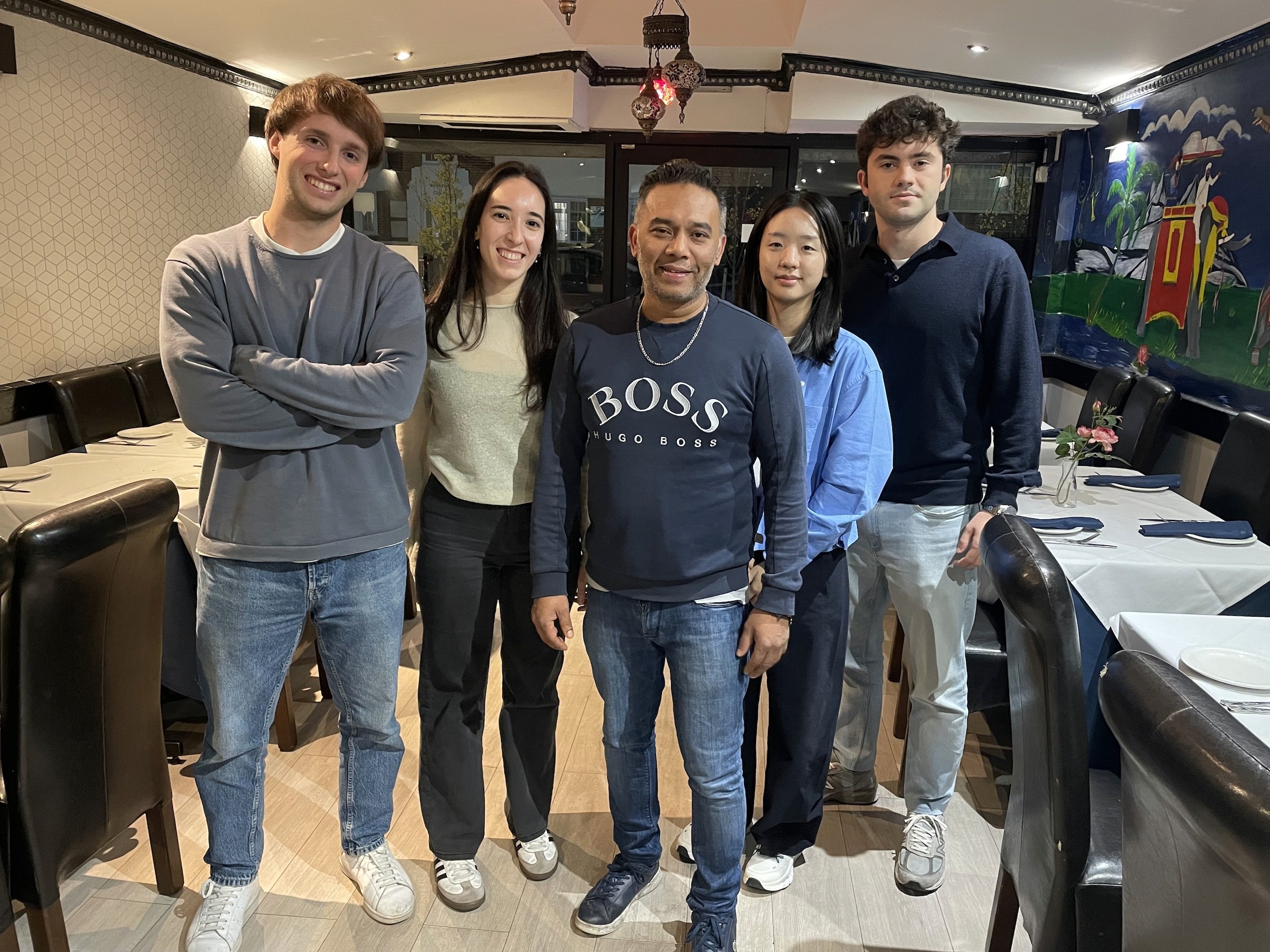
Our partnership with Poppadom serves as our primary commercial validation.
Prioritising Pain over Features: Before our involvement, Poppadom was actively shopping for a digital compliance solution given their low hygiene rating. However, they found that existing market options were overly generic and expensive.
Co-Development as a Conversion Tool: By allowing Poppadom to prioritise their specific pain points in our roadmap, we have secured a commitment to be our first paying customer for £60/mo. Their willingness to invest time and resources into our prototype is the strongest indicator of the platform’s perceived value.
Market Opportunity: The Failure of "All-in-One" Competitors
The compliance software market is currently fragmented. Existing competitors often fall into the trap of "feature creep", building tools that try to manage everything from payroll to inventory. This results in a compliance module that is shallow and difficult to use.
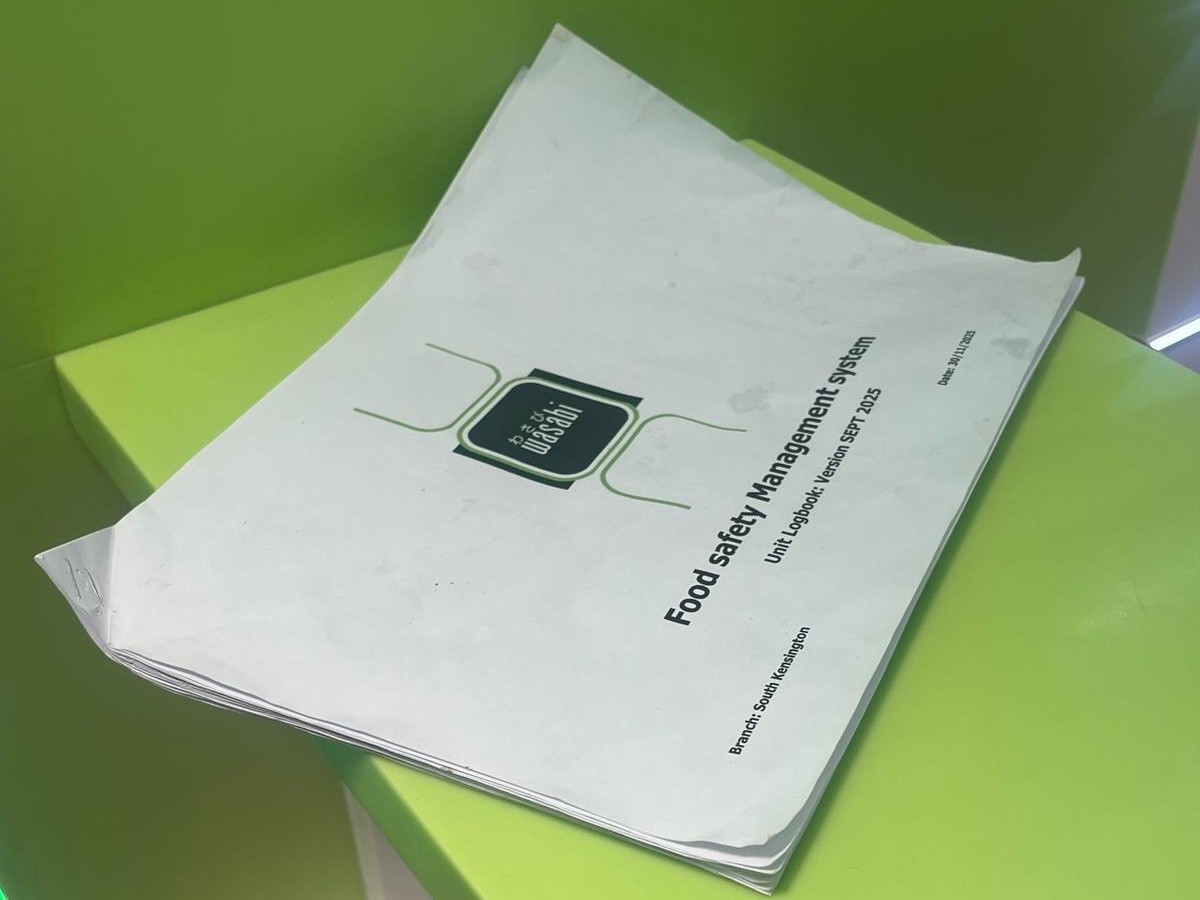
The Wasabi Case Study: Our research uncovered that even major chains like Wasabi are currently subscribed to legacy compliance platforms, yet their staff still performs the majority of tasks manually (see picture below). This presented two main strategic realisations that reinforce WTP:
The “Shelfware” Problem: Large operators are paying for these platforms to satisfy corporate requirements, but staff refuse to use them on the ground because the software is slow and non-intuitive.
Investment Available: There is a proven budget for compliance in London restaurants (1-10k range per our interviews), but there is no loyalty to the current providers.
Objective: Aim to capture budgets by positioning our platform as a specialist tool (depth vs. breadth). By doing one thing, compliance, perfectly, we solve the 'shelfware' problem, ensuring high daily usage and a superior return on investment for both our clients and our business.
4. Conclusion
Realistic Analysis
We acknowledge that users often say something and do the opposite. Until we receive the money from our first paying customer, we will not have fully proven WTP or any of the other assumptions. And even then, we will need to validate our higher pricing tiers with larger restaurants, which will carry its own risks due to scale, reason why is reflected on our risk assessment.
However, given the scope of the module we believe we have achieved the highest level of confidence we could. This came from securing a paying customer, obtaining green light and partnering with regulatory bodies, and conducting a pilot with our prototype and a real restaurant where time, money and effort was saved.
All in all, as illustrated in the Truth Curve from Testing with Humans, we have proven pre-selling and conducted pilots, positioning us at pre live product and business.
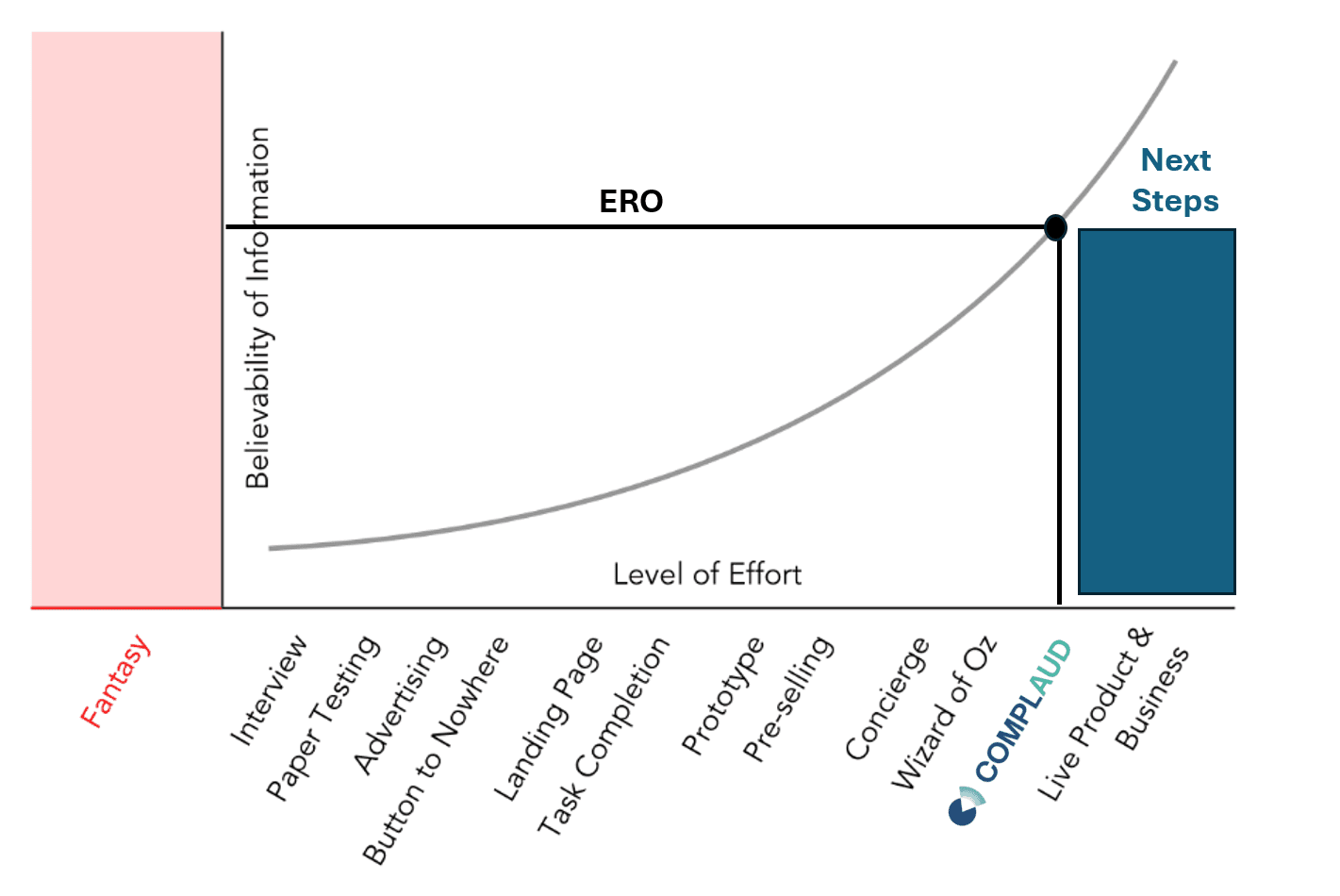
Source: https://giffconstable.com/2013/06/the-truth-curve/
Confidence Levels
Assumption | CL Before Validation | CL After Validation | Rationale |
|---|---|---|---|
#1 Problem | 60% | 90% | Qualitative interviews showed desire, quantitative shadowing showed impact |
#2 Regulators | 50% | 90% | Secured acceptance and partnership |
#3 Benefits | 40% | 70% | Saved time, effort and money during a real pilot with our restaurant partner |
#4 WTP | 30% | 60% | Secured first paying customer commitment |
The Big Picture
To sum up, the objective of validating the aforementioned assumptions was to prove a business case, which can be broken down into tje desirability, viability and feasibility (DVF) framework from Testing Business Ideas. By having increased the CL in all categories, we are more certain than 3 months ago that this business would survive in the real world.